HAMTRACE visits Prosciuttificio Martini Stagionatura: mapping the chemistry of Prosciutto di Parma ageing
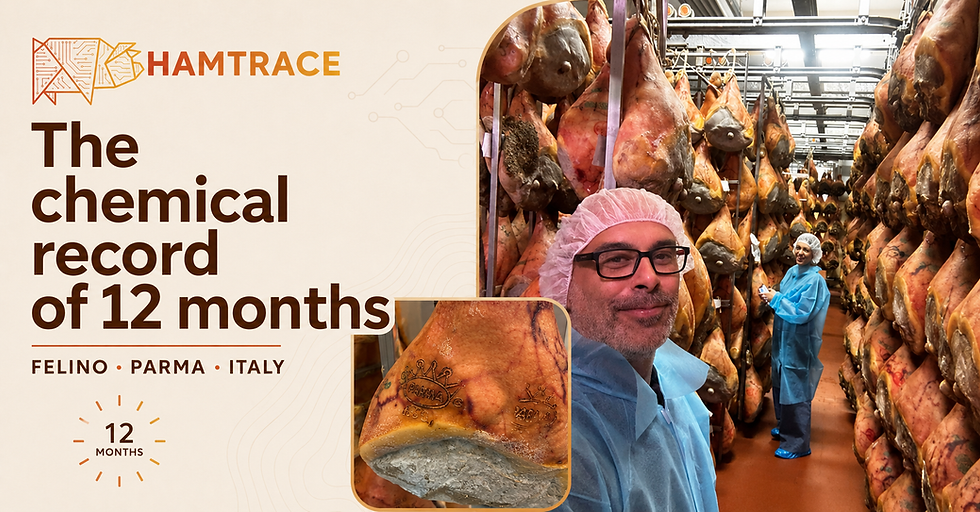
On July 2026, the HAMTRACE team visited Prosciuttificio Martini Stagionatura in Felino, Province of Parma, the second field stop of the Italy WP1 campaign, hosted by HAMTRACE partner FOODHUB. The visit examined the curing and ageing stage of the Prosciutto di Parma DOP production chain, where salt, water activity, pH, and environmental conditions combine to produce the chemical signature that distinguishes authentic Parma ham from imitations.
The chemistry of the Parma DOP specification
The Prosciutto di Parma production specification defines conditions that are simultaneously regulatory and chemical. Sea salt is the only permitted additive. Nitrites and nitrates are prohibited, a distinguishing feature from most other European cured hams, making their absence a verifiable chemical compliance marker. Ageing lasts a minimum of 12 months, with natural ventilation from the Apennine winds preferred during the final drying stages.
These conditions produce characteristic chemical profiles. NaCl concentration evolves across salting stages and reaches equilibrium during ageing. Water activity (aw) drops progressively and serves as a compliance and quality marker at each stage. pH stabilises after salting and reflects raw material quality at receipt. The temperature and humidity of the Apennine cellar, typically 14–18°C with 60–75% relative humidity, contribute to the specific enzymatic and microbial environment that generates the flavour and texture profile of Parma DOP. Together, these parameters form a verifiable chemical fingerprint.
A relationship built on prior collaboration
The Martini Stagionatura visit built on an earlier supply chain digitalisation initiative involving FOODHUB and UAB. That project introduced digital tracking of leg origins (linked to supplying farms), QR-code labelling of finished products for consumer-facing authentication, and identified gaps, in particular the absence of digitised temperature and humidity records from the ageing cellars. HAMTRACE's WP1 fieldwork explored whether those gaps have since been addressed, and how chemical parameter data could be integrated into the existing digital record.
This model, digital chain-of-custody combined with independent chemical verification, is the architecture HAMTRACE is prototyping and comparing across four countries. The Consorzio del Prosciutto di Parma's own new strategic plan, announced on 4 July 2026, introduces a similar IT-based data system spanning farms, abattoirs, and curing plants. The two initiatives address different but complementary aspects of the same traceability challenge.
What was discussed
The team reviewed NaCl application across salting stages, internal aw and pH monitoring practices, the current state of environmental data capture in the ageing cellars, the facility's awareness of authenticity testing within the Consorzio, and the data-sharing arrangements that could support future T1.2 analytical sampling.
Primary contact: Emanuele Fabris, Prosciuttificio Martini Stagionatura.
More information: https://cordis.europa.eu/project/id/101236645


Comments