From microbiology to ham authenticity: UDG food safety expert completes HAMTRACE secondment in Barcelona
Prof. Aleksandra Martinović of the University of Donja Gorica spent one month at the Universitat Autònoma de Barcelona, the HAMTRACE coordinator, meeting research groups in biotechnology, microbiology and molecular biology and exploring how their work can support the authentication and safety of dry-cured ham.
Barcelona, October 2026. From 11 September to 12 October 2026, Prof. dr Aleksandra Martinović, Full Professor at the University of Donja Gorica (UDG) and Dean of the Faculty of Food Technology, Food Safety and Ecology, completed a one-month secondment at the Universitat Autònoma de Barcelona (UAB), coordinator of the Horizon Europe project HAMTRACE. The secondment aimed to connect UDG's expertise in food safety and molecular microbiology with the research groups and facilities at UAB, and to look for ways in which they can complement the chemical and elemental fingerprinting work on dry-cured ham at the core of the project.
HAMTRACE (Advancing European Dry Cured Ham Value Chains with Data-Driven Authentication and Global Traceability Standards) is a four-year Marie Skłodowska-Curie Actions Staff Exchange project funded by the European Union. Ten organisations from Spain, Montenegro, Italy, France, Serbia and the United Kingdom work together to protect dry-cured hams from fraud and to help producers prove the origin and quality of their products, using chemical fingerprinting and blockchain-based traceability.
Meeting UAB's research groups Prof. Martinović visited two UAB research centres, where she met the teams of the Centre for Animal Biotechnology and Gene Therapy (CBATEG) and the Institute of Biotechnology and Biomedicine (IBB). The meetings gave an overview of the centres' research, facilities and expertise and opened discussions on possible joint work with UDG.
The discussions identified common interests in molecular and microbiological methods, biotechnology and food safety, and the researchers agreed to stay in touch and explore further exchanges and joint research.
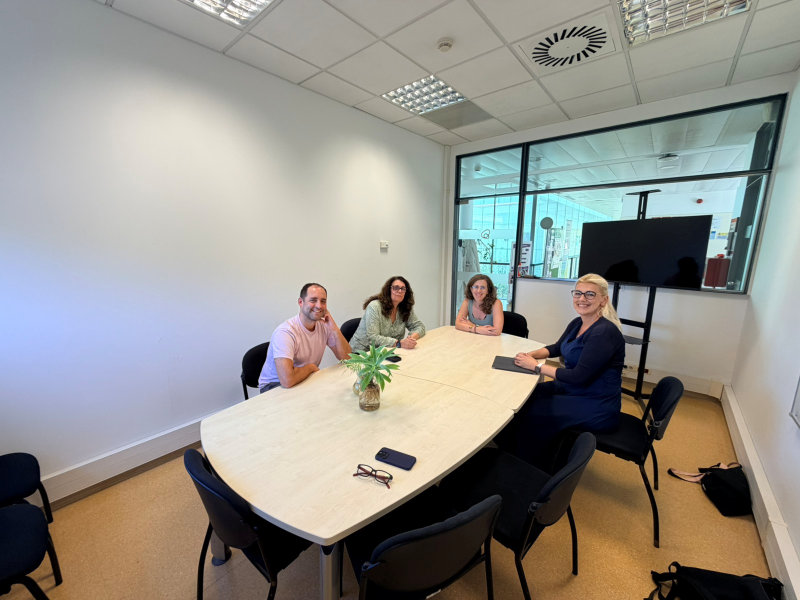
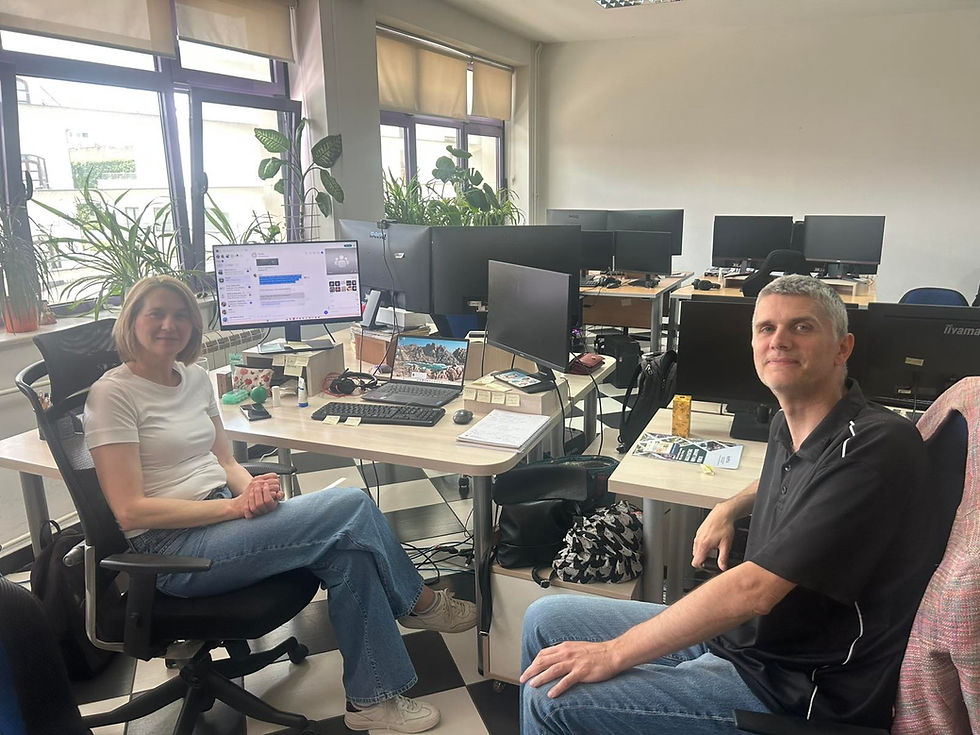
Meeting with the UAB teams, 14 September 2026. Photo: UDG archive.
During her stay, Prof. Martinović also met Prof. Manuel Valiente, coordinator of HAMTRACE at UAB. They discussed UDG's contribution to the project's work on food safety and authenticity, the next project activities and how to involve more Montenegrin ham producers.
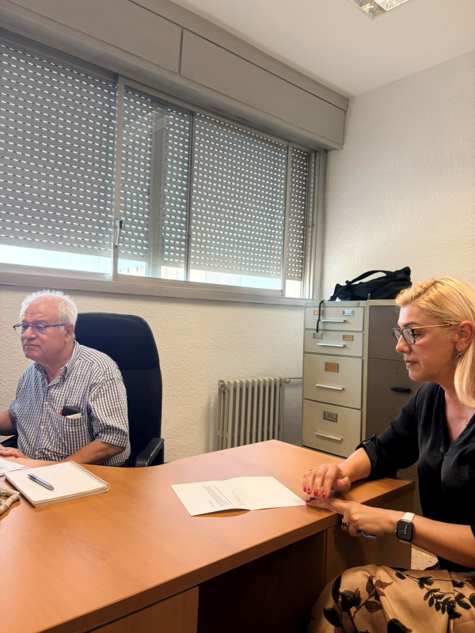
Prof. Aleksandra Martinović with Prof. Manuel Valiente, HAMTRACE coordinator, at UAB, Barcelona. Photo: UDG archive.
Why microbiology matters for ham authenticity
Dry-cured ham is a product of time, place and microorganisms. Prof. Martinović's research covers food safety risk assessment, molecular microbiology and whole-genome sequencing. Bringing this molecular perspective together with the analytical chemistry expertise of the HAMTRACE team at UAB can strengthen the project's work on proving the origin, quality and safety of dry-cured ham.
"The secondment at UAB showed how much molecular microbiology and analytical chemistry can add to each other. The contacts we made in Barcelona open new opportunities for UDG and bring us closer to giving producers reliable tools to prove the origin, quality and safety of their ham," said Prof. Aleksandra Martinović from the University of Donja Gorica.
Next steps Back at UDG, the results of the secondment will be shared with colleagues at the Faculty of Food Technology, Food Safety and Ecology and with the HAMTRACE consortium. UDG will follow up with the CBATEG and IBB teams on further exchanges and joint research, and will keep working with UAB on bringing Montenegrin ham producers closer to the project.
About HAMTRACE HAMTRACE is coordinated by UAB (Spain) and includes UAB, University of Donja Gorica (Montenegro), Sapienza University of Rome (Italy), ALBA Synchrotron (Spain), CETI (Montenegro), ADERA/UT2A (France), DunavNET (Serbia), Europe for Business (UK), ASICI (Spain) and Food Hub (Italy).
Media contact: Lesley Tobin, lesley@e4business.eu; HAMTRACE Communication Team
Funded by the European Union (Grant Agreement No 101236645). Views and opinions expressed are however those of the author(s) only and do not necessarily reflect those of the European Union or the European Health and Digital Executive Agency (HADEA). Neither the European Union nor the granting authority can be held responsible for them.
Comments